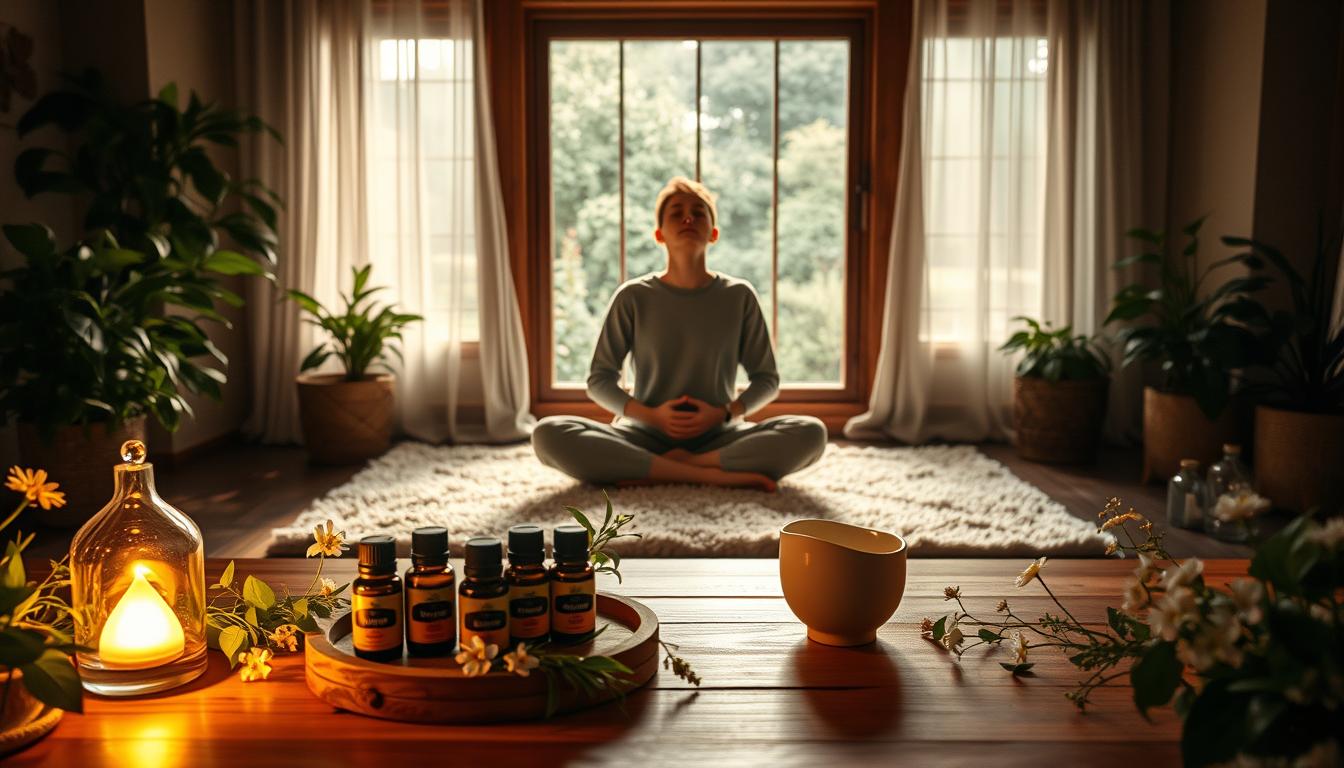
Can a simple sniff of a certain scent really calm your frazzled nerves and soothe your stress? The answer lies in the ancient practice of aromatherapy, a holistic healing technique that leverages the power of essential oils derived from plants to promote emotional, physical, and mental well-being.
Aromatherapy has been used for centuries to manage anxiety and promote relaxation. By incorporating it into your daily routine, you can effectively reduce stress and improve your overall quality of life.
As we explore the world of aromatherapy, you’ll discover how this natural therapy can be a game-changer for those seeking a more balanced life.
Key Takeaways
- Aromatherapy is a natural stress management technique.
- Essential oils can promote relaxation and reduce anxiety.
- Incorporating aromatherapy into daily life can improve overall well-being.
- Aromatherapy is a holistic approach to health.
- Natural scents can have a profound impact on mental health.
Understanding the Science Behind Aromatherapy
By examining the neurological aspects of aromatherapy, we can better understand its stress-relieving properties. Aromatherapy involves the use of essential oils derived from plants to promote relaxation and reduce stress.
How Scents Affect Your Brain
When we inhale essential oils, the scent molecules travel up our nostrils and bind to olfactory receptors in the nasal cavity. This binding process triggers a signal that is sent to the brain, specifically to the limbic system.
The Limbic System and Emotional Responses
The limbic system plays a crucial role in processing emotions and memories. The calming effects of aromatherapy are largely due to its ability to influence the limbic system, promoting a sense of calm and reducing anxiety.
Research Supporting Aromatherapy for Stress Management
Studies have shown that aromatherapy can be effective in reducing stress. A table summarizing some key findings is provided below:
| Study | Essential Oil Used | Outcome |
|---|---|---|
| Study 1 | Lavender | Reduced anxiety in patients |
| Study 2 | Bergamot | Improved mood in individuals with stress |
| Study 3 | Frankincense | Reduced symptoms of anxiety and depression |
Reducing stress with aromatherapy is a natural and effective way to promote well-being. By understanding the science behind it, we can better appreciate its benefits.
The Benefits of Aromatherapy for Stress Relief
Aromatherapy offers numerous benefits for stress relief, impacting both physical and psychological well-being. By leveraging the power of essential oils, individuals can experience a range of advantages that contribute to overall health.
Physical Benefits
Aromatherapy can have a positive impact on physical health by reducing muscle tension and lowering blood pressure. These physical benefits are crucial for managing stress.
Reduced Muscle Tension
Essential oils such as lavender and chamomile can help relax muscles, reducing tension and promoting relaxation.
Lowered Blood Pressure
Certain scents, like bergamot, have been shown to help lower blood pressure, contributing to overall cardiovascular health.
Psychological Benefits
In addition to physical benefits, aromatherapy also offers psychological advantages, including anxiety reduction and mood enhancement.
Anxiety Reduction
Oils like ylang-ylang and frankincense have calming properties that can help reduce anxiety and promote a sense of calm.
Mood Enhancement
Aromatherapy can also enhance mood by releasing endorphins, also known as “feel-good” hormones, through the use of uplifting scents like citrus.
Improved Sleep Quality
Aromatherapy can contribute to improved sleep quality by creating a relaxing environment and promoting a restful night’s sleep.
| Benefit | Description | Essential Oils |
|---|---|---|
| Reduced Muscle Tension | Relaxation of muscles, reducing tension | Lavender, Chamomile |
| Lowered Blood Pressure | Contribution to cardiovascular health | Bergamot |
| Anxiety Reduction | Calming properties to reduce anxiety | Ylang-ylang, Frankincense |
| Mood Enhancement | Release of endorphins for improved mood | Citrus |
“Aromatherapy is a holistic healing treatment that uses natural plant extracts to promote health and well-being.”
By understanding the benefits of aromatherapy for stress relief, individuals can make informed decisions about incorporating this practice into their daily lives.
Essential Oils That Combat Stress
The world of aromatherapy is rich with essential oils that can help combat stress and anxiety. These natural remedies have been used for centuries to promote relaxation and well-being. In this section, we’ll explore some of the most effective essential oils for stress relief.
Lavender: The Ultimate Relaxation Oil
Lavender oil is renowned for its calming properties. It can help reduce anxiety and promote a good night’s sleep. Studies have shown that inhaling lavender oil can decrease heart rate and lower blood pressure, making it an excellent choice for those experiencing stress.
Bergamot: Uplifting and Calming
Bergamot oil offers a unique blend of uplifting and calming effects. Its citrus scent can help reduce anxiety while promoting a sense of well-being. Bergamot oil is often used in aromatherapy to alleviate stress and improve mood.
Chamomile: Soothing Anxiety
Chamomile oil is another popular choice for stress relief. Its soothing properties can help calm the mind and body, making it easier to manage anxiety. Chamomile tea and oil are often used in conjunction for enhanced relaxation.
Ylang Ylang: Balancing Emotions
Ylang ylang oil is known for its ability to balance emotions and reduce stress. Its sweet, floral scent can help promote feelings of calmness and relaxation. Ylang ylang oil is often used in perfumes and aromatherapy blends.
Frankincense: Grounding and Centering
Frankincense oil has been used for centuries for its grounding and centering properties. It can help reduce anxiety and promote a sense of calm. Frankincense oil is often used in meditation practices.
Other Stress-Relieving Essential Oils
In addition to the oils mentioned above, there are several other essential oils that can help alleviate stress. These include:
- Clary sage
- Geranium
- Sandalwood
Each of these oils has its unique properties and benefits. Experimenting with different oils can help you find what works best for you.
Methods of Using Aromatherapy at Home
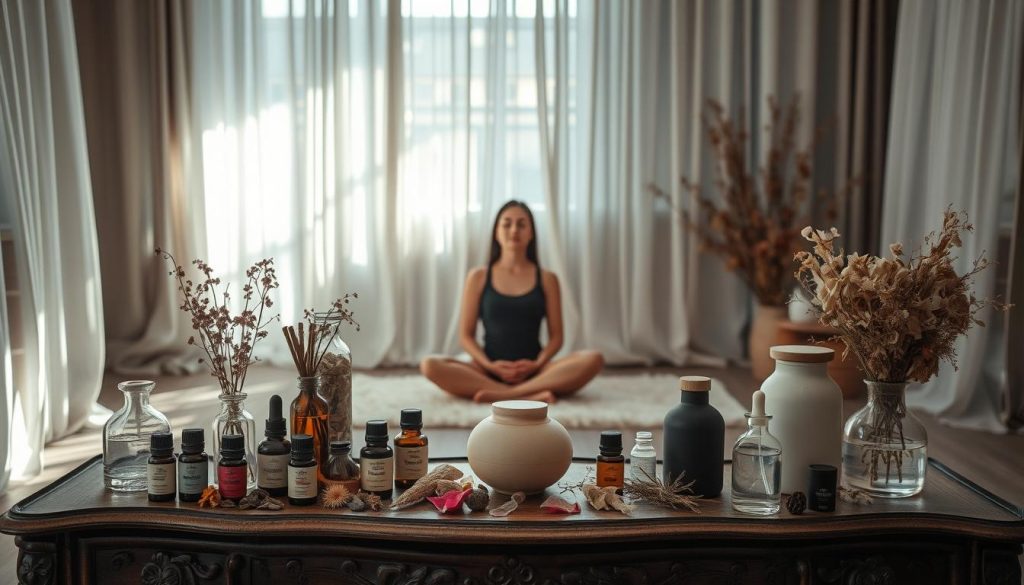
To harness the benefits of aromatherapy, it’s essential to understand the different methods of using it at home. Aromatherapy offers a variety of aromatherapy stress relief techniques that can be easily incorporated into daily life to reduce stress and promote relaxation.
Diffusers and Humidifiers
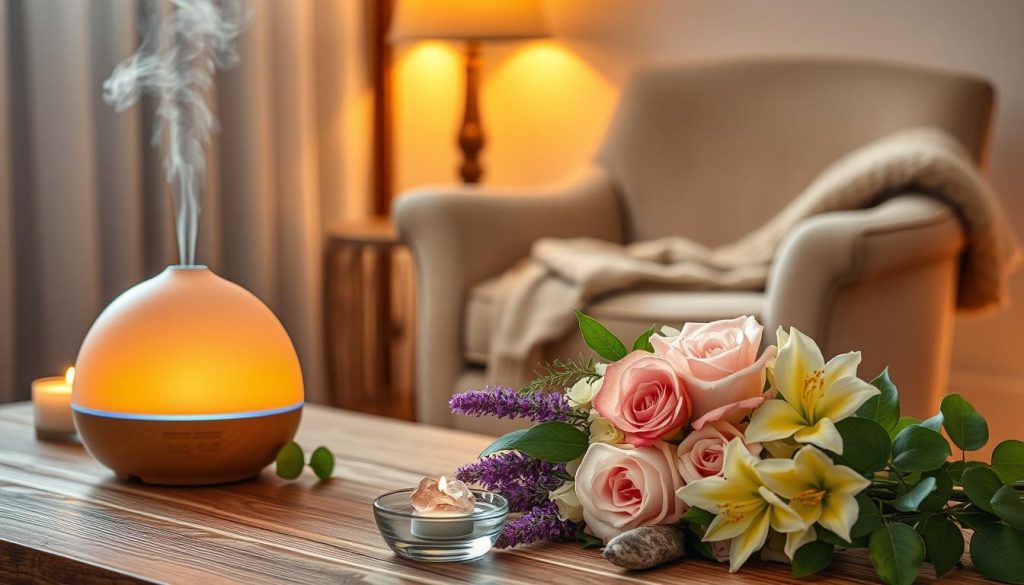
Diffusers and humidifiers are popular devices used in aromatherapy. They work by releasing the fragrance of essential oils into the air, creating a calming atmosphere. Using these devices is one of the most effective natural stress relief through aromatherapy methods.
How to Use Different Types of Diffusers
There are several types of diffusers, including ultrasonic, nebulizing, and heat diffusers. Ultrasonic diffusers use water and vibrations to diffuse the oil, while nebulizing diffusers break down the oil into tiny particles without water. Heat diffusers use warmth to release the fragrance.
Recommended Diffusion Times
For optimal results, diffuse essential oils for 15-30 minutes at a time. This allows the body to absorb the benefits without becoming desensitized to the scent.
Topical Applications
Topical application involves applying essential oils directly to the skin. This method is effective for targeted relief and is a key aspect of reducing stress with aromatherapy.
Creating Massage Oils
Mix essential oils with carrier oils like coconut or jojoba oil to create a massage blend. This can enhance the massage experience and provide additional relaxation benefits.
Pressure Point Application
Applying essential oils to specific pressure points can help alleviate stress and tension. Common pressure points include the temples, wrists, and behind the ears.
Aromatherapy Baths
Adding essential oils to your bathwater can create a relaxing and rejuvenating experience. Use 5-10 drops of your preferred essential oil and mix with a carrier or bath salts.
Inhalation Techniques
Direct inhalation from a cloth or handkerchief is a simple and effective method. You can also use a personal inhaler for convenience.
Step-by-Step Guide to Creating Your Personalized Aromatherapy Routine
Creating a personalized aromatherapy routine can be a game-changer for managing stress and anxiety. By understanding your specific stress triggers and matching them with the right essential oils, you can develop an effective stress relief strategy.
Identifying Your Stress Triggers
The first step in creating your personalized aromatherapy routine is to identify your stress triggers. Take a moment to reflect on the situations, emotions, or events that cause you the most stress. Is it work-related pressure, personal relationships, or financial concerns? Keeping a stress journal can help you pinpoint these triggers, allowing you to tailor your aromatherapy approach more effectively.
Matching Oils to Your Needs
Once you’ve identified your stress triggers, it’s time to match them with the appropriate essential oils. For instance, if you’re dealing with work-related stress, peppermint or rosemary essential oils might be beneficial for their invigorating properties. For anxiety or emotional stress, calming oils like lavender or chamomile can be more suitable.
Setting Up Your Aromatherapy Space
Creating a dedicated aromatherapy space can enhance your stress relief experience. Choose a quiet, comfortable area where you can relax without distractions. Invest in a good quality diffuser and keep your essential oils within easy reach.
Sample Routines for Different Situations
Here are a few sample aromatherapy routines for different situations:
- For morning stress: Use a citrus-based blend like bergamot or grapefruit to start your day on a positive note.
- For work-related stress: Try a blend of frankincense and lavender to promote focus and calmness.
- For evening relaxation: Use ylang-ylang or chamomile to unwind and prepare for a restful night’s sleep.
As noted by Dr. Jane Smith, “Aromatherapy can be a valuable tool for stress management when used correctly and consistently.” By following these steps and tailoring your aromatherapy routine to your specific needs, you can harness the full potential of essential oils for stress relief and overall well-being.
DIY Aromatherapy Blends for Different Types of Stress
Customizing your aromatherapy blends can be a game-changer for managing stress. By understanding the different types of stress and creating tailored blends, you can maximize the stress-relieving benefits of essential oils.
Work-Related Stress Blends
For work-related stress, specific blends can help improve focus and reduce pressure.
Focus and Concentration Blend
Combine peppermint, rosemary, and lemon essential oils to enhance mental clarity and focus.
Deadline Pressure Relief Blend
Mix bergamot, ylang-ylang, and frankincense to alleviate anxiety and promote calmness under pressure.
Sleep-Enhancing Blends
For sleep disturbances, blends like lavender and chamomile can promote relaxation and improve sleep quality.
Anxiety-Reducing Blends
Blends featuring ylang-ylang, bergamot, and sandalwood can help reduce anxiety and promote emotional balance.
Quick Stress Relief Blends
For immediate stress relief, a blend of peppermint, eucalyptus, and lavender can be highly effective.
Safety Considerations and Precautions
When incorporating aromatherapy into your stress relief routine, it’s crucial to be aware of the safety considerations to maximize its benefits. Aromatherapy, while natural, can have adverse effects if not used properly.
Proper Dilution Guidelines
Essential oils are highly concentrated and must be diluted before applying to the skin. A general dilution ratio is 1-3% essential oil to carrier oil. For example, for every 1 teaspoon of carrier oil, you can add 5-15 drops of essential oil.
| Dilution Ratio | Essential Oil Drops | Carrier Oil Amount |
|---|---|---|
| 1% | 5 drops | 1 teaspoon |
| 3% | 15 drops | 1 teaspoon |
Allergies and Sensitivities
Some individuals may be allergic or sensitive to certain essential oils. It’s recommended to perform a patch test before using a new oil. If you experience any irritation, discontinue use.
Special Considerations for Pregnant Women and Children
Pregnant women and children require special care when using aromatherapy. Certain oils can be harmful, so it’s essential to consult with a healthcare professional before use.
Essential Oil Storage and Shelf Life
Essential oils should be stored in a cool, dark place to preserve their potency. Most essential oils have a shelf life of 1-5 years, depending on the oil.
By following these safety considerations and precautions, you can enjoy the benefits of aromatherapy for stress relief while minimizing potential risks.
Conclusion: Embracing Aromatherapy as Part of Your Wellness Journey
As we’ve explored throughout this article, aromatherapy offers a natural and effective approach to stress management with aromatherapy. By incorporating essential oils into your daily routine, you can experience the aromatherapy benefits for anxiety and achieve natural stress relief through aromatherapy.
To make aromatherapy a lasting part of your self-care routine, start by identifying your stress triggers and matching oils to your needs. Experiment with different methods, such as diffusers, topical applications, and inhalation techniques, to find what works best for you.
By embracing aromatherapy as a complementary therapy, you can cultivate a more balanced and healthy lifestyle. With its numerous benefits and versatility, aromatherapy is an excellent addition to any wellness journey, providing a sense of calm and relaxation in today’s fast-paced world.
FAQ
What is aromatherapy and how does it help with stress relief?
Aromatherapy is a holistic healing practice that utilizes essential oils derived from plants to promote physical, emotional, and mental well-being. By incorporating aromatherapy into your daily routine, you can effectively manage stress and anxiety.
How do essential oils work to reduce stress and anxiety?
Essential oils interact with the brain’s limbic system, which processes smells and triggers emotional reactions. Certain essential oils, such as lavender and bergamot, have a calming effect on the mind and body, reducing stress and anxiety.
What are some of the physical benefits of using aromatherapy for stress relief?
Aromatherapy can help reduce muscle tension, lower blood pressure, and promote relaxation, all of which can contribute to a decrease in physical stress symptoms.
Can aromatherapy be used in conjunction with other stress management techniques?
Yes, aromatherapy can be used in combination with other stress management techniques, such as meditation, yoga, or deep breathing exercises, to enhance its benefits and promote overall well-being.
How do I choose the right essential oils for my stress relief needs?
Different essential oils have unique properties and benefits. For example, lavender is known for its calming effects, while bergamot is uplifting and calming. You can experiment with different oils to find what works best for you.
Are there any safety precautions I should take when using aromatherapy?
Yes, it’s essential to follow proper dilution guidelines, be aware of potential allergies and sensitivities, and take special considerations for pregnant women and children. You should also store essential oils properly and check their shelf life.
Can I use aromatherapy if I have a medical condition or take medications?
It’s recommended that you consult with a healthcare professional before using aromatherapy, especially if you have a medical condition or take medications, to ensure safe and effective use.
How can I incorporate aromatherapy into my daily routine?
You can use diffusers, apply essential oils topically, or inhale them directly to incorporate aromatherapy into your daily routine. You can also add essential oils to your bath water or use them in massage oils.